
Written by Terry Smith
Our site is reader supported so when you click a link to Amazon we may earn an affiliate commission.
Best electric leaf vacuum mulchers [UK]: blowers and vacuums compared and reviewed
This article was last updated on September 25th, 2021 at 8:41 am
As much as I love the British summertime, I still can’t avoid the feeling that Autumn is not too far away, and I’m going to be busy removing leaves from my garden, and if you’ve ever had to do the same, you will know that it is far from the most enjoyable gardening task.
You can make things a lot easier with the right tools, such as leaf grabbers, a decent shovel, and best of all: a leaf vacuum/blower. These versatile tools are such a godsend when it comes to dealing with damp leaves and other natural debris that you’ll wonder how you’ve gotten along without one.
Best leaf vacuum list below:
- Flymo PowerVac 3000V (My pick for best overall)
- Bosch Universal garden tidy (Best collection bag)
- Vonhaus 3-in-1 leaf vacuum and blower (Best blower function)
- Hyundai 3-in-1 leaf blower vacuum
- Terratek Leaf blower Garden Vacuum and Shredder
What is a leaf vacuum/blower?
For shifting a lot of dead leaves from your lawn, drive, and patio, nothing quite beats a leaf vacuum blower combo tool. Combining two tools into one, these machines not only save you time and effort, but also a fair few quid too when compared to buying said tools separately.
Leaf vacuum blowers are basically long tubes that can blow or suck up leaves and other debris. They can be powered by petrol engines or electric motors, and can run on petrol, the mains electric supply, or lithium-ion batteries, as is the case with cordless models.
If it’s raw, all-out-power that you are after, then a petrol-powered vacuum blower is the way to go, but just be prepared for some extra weight, noise, and of course, smells. For small to medium sized gardens, an electric machine should more than suffice, and they are probably the cheapest type you can buy too. For more details please see: Comparing a petrol leaf blower with an electric and cordless leaf blower for leaf clearing performance
If you don’t like the idea of trailing a long cable across your garden, then you might want to go with a Cordless leaf vacuum blower. Modern cordless machines are almost as powerful as corded counterparts, and give you more freedom of movement and range. They are let down slightly by battery life, but that’s just the nature of cordless tools.
Having the choice to switch from vacuuming to blowing is really handy, as neither mode is the best for all situations. For example, if you have a large open area like a lawn, the blower is the best mode to have it on. For tighter areas, I would go with the vacuum, as you can end up blowing the leaves onto flower beds and other areas by accident.
Lower down on this page, you can find our reviews of the best electric leaf vacuum blowers, but if you’d prefer to check out petrol or cordless versions, then you should head over to our pages that are dedicated to them by clicking the links provided.
Possible problems with leaf vacuum blowers
Although I wouldn’t really call it a problem, one complaint made about these combination tools is that they generally aren’t as powerful as a blower or vacuum that has a single mode.
I would agree that this is usually true, but that doesn’t mean that these tools aren’t any good. In fact, most of the best products deliver enough power in both modes to get home-based tasks completed, and the money you save from buying a single tool more than makes up for any shortcomings.
If you intend on using the vacuum function more than the blower, make sure that the collection bag that comes with the machine is a big enough size to handle the intended job. Some models have smaller collection bags and this leaves you emptying it often and wasting time. How easy it is to remove and reattach the collection bag should also be something you look at.
Another common problem with vacuums is with leaves getting stuck in the machine. This is usually avoidable if you stay away from wet leaves and use the blower, then a good old shovel or leaf grabbers, to deal with them instead. If you do manage to get wet leaves jammed in there, you can just take the machine apart and clear the blockage, but it is better to avoid really wet leaves when vacuuming.
Using a leaf blower and vacuum effectively takes some practice, and at first, you might find that you are making things worse by blowing leaves under sheds and ornaments, and getting them stuck in places. Just persevere a little though, and you’ll soon get the hang of it and be herding those leaves into beautiful piles, just ready to go on the compost pile or in the incinerator.
Example of using a leaf blower vacuum tool
The first ever leaf blower I got my hands on was given to me as a Christmas present, and was a fairly low-powered electric model from some unheard-of brand. Needless to say, it was fairly useless, and I could almost hear the wet leaves laughing at me as I struggled in vain to remove them from my patio and lawn.
Never one to be defeated, I went out and bought the most powerful petrol leaf blower I could find and returned to battle the leaves. The extra power worked wonders with the patio, and I soon had a nice pile in the corner, ready to be bagged up.
The lawn was a different story, and I actually managed to damage the surface of it with the blower, plus a few plants and flowers in the process too. The petrol blower was just too powerful, and I was holding it too close to the ground. Beginners’ mistakes.
Over the years, I’ve had a lot more experience with these tools, and have learned a few things that I’ll share with you here:
- Damp leaves shouldn’t cause you too many problems with modern leaf vacuums and blowers. However, there is a difference between damp leaves and soaked leaves. If your leaves are really wet, and they are on your lawn, it’s probably better to leave them to dry out a little before attempting to shift them.
- More power is not always better. As I learned the hard way, you can easily damage your garden with a really powerful leaf vacuum or blower, and these kinds of tools are ideally used on harder surfaces like your driveway, path, and patio.
- Removing dead leaves from your flower beds is not really a job to be tackled with a leaf blower. You can do it with a lower-powered electric vacuum if you are very careful, but, if possible, pick the leaves up by hand, with grabbers, or just rake them to avoid damaging your plants.
Best leaf vacuum blowers reviewed
Comparison table: Best electric leaf vacuum mulchers [UK]: blowers and vacuums compared and reviewed | ||||||
|---|---|---|---|---|---|---|
| Product | What We Think | Price | ||||
Bosch Home and Garden 06008B1070 UniversalGardenTidy     | Pros:
Cons:
| |||||
VonHaus 3 in 1 Leaf Blower - 3000W Garden Vacuum, Blower, Mulcher     | Pros:
Cons:
| |||||
Hyundai 3 in 1 3000W Electric Leaf Blower vacuum     | Hyundai 3 in 1 3000W Electric Leaf Blower is the best on the market for me when it comes to a reliable brand and warranty. Hyundai are well known for producing super petrol engines garden equipment, now they are showing they are great with electric too. When you look at the cost, this would be my top pick as the best electric leaf vacuum mulcher | |||||
Terratek Leaf blower Garden Vacuum and Shredder     | The Terratek Leaf blower Garden Vacuum and Shredder is well designed, nice and light rated at 3000 Watts. It's a reliable bit of kit with the occasional leaf blockage. Definitely worth considering in these top picks | |||||
Flymo PowerVac 3000V Electric Blower, 3000W 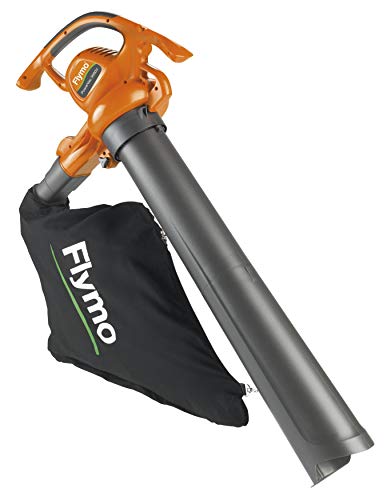    | Flymo just couldn't help themselves could they? How long would it be before they spotted the opportunity to produce the best value electric leaf vacuum blower. The Flymo PowerVac 3000V Electric Blower is a super bit of kit and worth the money, no question. | |||||
1. Flymo PowerVac 3000V Electric Blower, 3000W
Specification: Warranty: 2 Years, Power Source: Corded Electric, Rated Power: 3000W, Blow Speed: 310 km/hr, Suction capacity: 168 l/s, Power cord length: 10M, Collection Bag: 45L
As a first leaf vacuum blower the Flymo PowerVac 3000V is a good choice, offering up some decent power when needed, and being very user friendly, like most Flymo products.
As a blower, it works really well, reaching blow speeds of up to 310kmh, and air speeds of 86.11 m/s, thanks to the powerful 3000-watt motor. When all that power is needed, say for working in more delicate areas, the variable speed controls come into play, giving you the option to dial it down.
To change from blower to vacuum, you do have to change the nozzles, but thankfully, this isn’t a huge task and you can switch modes within minutes. It’s really only a case of twisting and clicking the attachments into place, and can be done by anyone.
I will say that when used as a vacuum, this product doesn’t work as well as it does a blower and there are a couple of reasons for this. The first one is that I found the vacuum attachment felt a little awkward to hold at the right angle, and secondly, larger twigs and thick, wet, leaves can cause the impeller to jam. The latter is a problem with pretty much all electric leaf vacuums to be honest, so I can’t really mark it down too much for that.
When used on dry leaves, the vacuum really performs how you’d expect, and there is a decent amount of suction power. When used on decking, you can have the power turned up, and clear it of leaves in no time at all. Damp leaves are fine too, but avoid wet ones.
As the leaves pass through the impeller, they are shredded into smaller pieces before being sent into the 45-litre collection bag. As they are shredded to a 16:1 ratio, it means you don’t have to empty the bag too often.
The Flymo 3000V, like most modern vacuum blowers, is pretty lightweight and you shouldn’t need a shoulder strap, although there is one included in the price, just in case. Despite its lack of weight, the tool is solidly built, and the casing and other components feel well-made.
This vacuum blower isn’t perfect, but it is one of the best you can get for the price, and as previously stated, it would suit someone with a small to medium sized garden, thanks to the 10 metre power cable.
2. Bosch Home and Garden 06008B1070 UniversalGardenTidy
Specification: Warranty: 2 Years, Power Source: Corded Electric, Rated Power: 1800W, Air speed: 165-85 km/h , Suction capacity: 160 l/s, Power cord length: 10M, Collection Bag: 45L
If you’ve never used a leaf vacuum blower before, one thing that might surprise you is the noise. Granted, this problem is generally worse with petrol machines than electric ones, but even some electric leaf blowers can hurt the ears.
At around 89 decibels, this Bosch product is hardly what you would call quiet, but when compared to other electric leaf blowers in the same price range it isn’t too bad at all, and is roughly the same loudness as a motorcycle.
Like the Flymo 3000V, you will need to swap the attachments in order to switch from blower to vacuum, but again, this can all be done without tools and in very little time, so it doesn’t ever feel bothersome.
Although the 1800 watt motor in this tool is substantially smaller than the ones found in many of its competitors, it never really feels underpowered, and the alloy impeller does a much better job of shredding leaves without getting jammed than most.
One thing that can really annoy me with leaf vacuums, is that dirt and water can leak from the sides of the collection bag and end up all over you. With this product, Bosch has tried to address this issue by putting moisture-repellent deflectors on the bag, so that the water drips down to the ground. It actually works better than expected, and it was nice not to get soaked for a change.
Weight is about what you’d expect from these kinds of tools, which is roughly 5-6kg depending on which mode you are using it in. There is a shoulder strap included if you feel you need it, but I spent a while using this vacuum blower and didn’t require it.
Being a Bosch product, I wasn’t surprised that this leaf vacuum and blower was as well put together as it was. All the parts, from the attachment tubes to the collection bag are good quality and robust, but where the tubes connect to the main unit, the plastic doesn’t seem as strong for some reason.
Other than that small part, and a power cable that could have been better, I find it hard to say anything bad about the Bosch. It is a little more expensive than some of the other products featured on this page, but the quality is there for the extra money.
3. VonHaus 3 in 1 Leaf Blower - 3000W Garden Vacuum & Mulcher
Specification: Warranty: 2 Years, Power Source: Corded Electric, Rated Power: 3000W, Rated Frequency: 50Hz, Power cord length: 10M, Collection Bag: 35L
With its 3000-watt motor, the VonHaus 3 in 1 leaf blower vacuum is a powerful machine, but unfortunately, there have been some design designs that have stopped the tool from living up to its potential.
Don’t get me wrong, I’m not saying that this isn’t a good product, it’s just that there are a couple of things that could have been done better, and that would have made this vacuum blower rate higher, in my book at least.
The main issue I have with it, comes down to the vacuum function. While there is plenty of power to suck the leaves up, the end of the nozzle on the tube attachment just seems to get clogged easily if held too close to a pile of leaves.
As a blower, it is excellent, and the narrow nozzle creates a powerful jet of air that can shift damp leaves off hard surfaces with ease. You do have to be careful with it near delicate plants, but overall, it works great.
Switching from one mode to the other is as simple as flicking a switch. There’s no need to change attachments over like with a lot of these electric vacuum blowers, and this is a feature I’d like to see more of.
The 35 litre collection bag, and 10:1 shredding ratio, mean that you have to empty the leaves out more often when compared to the Flymo, but when you do need to, the zipped opening makes things easier. There is the common problem of grimy water dripping down the bag, but this wasn’t a surprise.
There are a couple of other little flaws and niggles with the VonHaus, such as the clip that holds the collection bag not being the greatest, and the bag itself would detach when it got full and heavy on the model that we used.
Still, I would have to say that you could fix these little flaws quite easily, and after all’s been said, it is quite a good leaf vacuum blower, especially when you consider the low price.
4. Hyundai 3 in 1 3000W Electric Leaf Blower, 45L Bag, Vacuum & Shredder
Specification: Warranty: 3 Years, Power Source: Corded Electric, Rated Power: 3000W, Speed: 62-170mph, Power cord length: 12M, Collection Bag: 45L
The Hyundai 3 in 1 electric leaf blower, vacuum, and shredder, reminds me of the VonHaus product we just reviewed. The reason being, it has some really good features that should place it higher on our list, but there are just a couple of niggly things that let it down.
Let’s start with the motor. At 3000W, this tool should be impressing you with its power, both as a blower and a vacuum. But, for some reason, that power just didn’t seem to manifest as much as expected, in either mode. Maybe I had my hopes up high because of the Hyundai name, but that’s how I was left feeling. It was better in blower mode than vacuum, it has to be said, and anyone who is familiar with these combo machines will probably not be that surprised by that.
And this is a shame, because the machine is well-built, and things like the variable speed controls and telescopic chute are excellent features. I particularly liked the latter, as it gave you a lot of control over how high you had to hold the tool while working, something that is often missing in these products.
The 45 litre collection bag is a good size, and made from pretty durable materials too. The problem is, just like the VonHaus vacuum blower, the clip that holds the bag in place often fails at its job when the bag starts to get full. It could have just been that the model I tested was faulty, but it was still annoying.
The Hyundai 3-in-1 leaf vacuum blower is very lightweight when compared to some other products, and there are small wheels on the end of the chute. This makes using the tool very far from tiring, but if you need it, there is a padded shoulder strap. I tried the strap out and found that it slipped off the shoulder a few times, but apart from that it was comfortable to wear.
There is almost no assembly required with this tool. All you really need to do is clip a couple of pieces together and you’re ready to go. You don’t need any tools, and you don’t really need to look at the instructions either.
Compared to the Bosch leaf vacuum, it does seem nosier, but the vibration levels while under operation are low, certainly not as noticeable as some of the others we tried out.
Another good feature is the 12 metre power cable, which should stop you needing an extension lead unless you have a large garden, and being able to switch modes without swapping chutes is yet another tick in the positive column for me.
So, as you can see, it is not as if this Hyundai product is short of good features. It’s just a few annoying little things that are hard not to notice. I realise that these products are all trying to keep the prices down, and so there will inevitably be things like this, but the lack of power from the 3000W motor just had me stumped.
5. Terratek Leaf blower Garden Vacuum and Shredder
Specification: Warranty: 2 Years, Power Source: Corded Electric, Rated Power: 3000W, Speed: 167mp/h (270km/h), Power cord length: 10M, Collection Bag: 35L
Terratek’s offering is yet another lightweight leaf vacuum and blower tool hoping to entice you with a list of practical sounding features. Does it deliver on those promises? I’d have to answer yes and no.
First off, the positives. The 3000W motor does a stellar job at producing strong airspeeds when the tool is in blower mode, and it really did a great job of shifting a mix of dry and damp leaves from the artificial grass we were testing it on, into a nice, tidy, pile in the corner.
Both the main chute, and the main unit that houses the motor, feel sturdy and durable for the price, and putting the tool together out of the box is really easy. The instructions were far from great, but I’m so used to that these days, I hardly feel like mentioning it.
Even with the chute attached, Terratek’s leaf vacuum feels lightweight and you really shouldn’t need the shoulder strap, especially as there are support wheels beneath the chute. The ergonomics of the tool feel pretty good too, and vibration isn’t too bad.
The problem I found with this product, and it is a common one for vacuum blowers, is that one mode works far better than the other. While working as a blower, it felt great, but when I tried vacuum mode, I was left feeling less than impressed.
I found that the tool would get jammed quite easily, not only at the impeller, but also where the unit connects to the collection bag. The collection bag itself is fine, and a decent size at 45 litres, but the part that connects to the vacuum is just too small. To be fair, it is very easy to unblock the machine, but I just found I was doing it more frequently that I wanted.
The Terratek also didn’t want to suck up damp leaves with any urgency, and sometimes not at all. I accept that wet leaves are a problem for most electric vacuums, but usually, damp leaves are not too much of a problem.
If you’re going to use this tool primarily as a blower, and only to suck up and shred dry leaves, it is a good pick. If you’re vacuuming leaves through Autumn though, you might find yourself unblocking the machine quite often.
Electric leaf vacuum blowers FAQ
What advantages do electric leaf vacuum blowers have over cordless and petrol ones?
The main ‘pros’ of electric machines when compared to petrol ones are the fact that they are cheaper, lighter, and much easier to use and maintain. Of course, there is no messing around with fuelling the machine up, and the noise and vibration levels tend to be lower.
When it comes to cordless machines, their main advantage is also their biggest flaw. These machines don’t have power cords, and so they are highly manoeuvrable and have great range. The problem is, you are limited to how long you can use them by battery life.
Should I buy a leaf blower separately to a leaf vacuum, instead of a combo tool?
It is completely up to you, but I would say it comes down to how much you will be using the tools, and for what kind of jobs. If you’ve read our reviews above, then you’ll know that a common ‘quirk’ of vacuum blower combos is that one mode works better than the other. So, if you really need to be blowing large quantities of leaves, and shredding them, it might be worth spending more money and getting two dedicated tools.
Alternatively, you could buy a more powerful vacuum blower, such as one that is petrol powered, saving you space in the garage or shed. Obviously, these are more expensive than electric models, but if it’s pure power and performance that you are after, they are hard to beat.
How can I avoid my leaf vacuum getting clogged and blocked?
It is very hard, if not impossible to prevent leaf vacuums getting blocked from time to time, but you can do a few things to reduce the frequency of this happening.
- Waiting until the leaves have dried out is the main one that I would recommend, as wet and even damp leaves are far more likely to get jammed. Often the top layer of leaves is dry but the one underneath is wet, so you could just do the top layer, and then come back a day or so later to take care of the others.
- If the eaves are in a shaded area, they’re probably going to stay damp and wet, so use the blower function and get them into an area of the garden that gets sunlight to dry them out for a few days before vacuuming and shredding them.
- Avoid leaves that are caked in soil and mixed in with other debris that will likely jam your machine. If those leaves look particularly grimy, just go old school and use a rake and grabbers to dispose of them instead.
- Keeping the bag clean, especially the part that connects to the machine is also important to avoid clogging. It’s something that many people neglect, and it is such a simple thing to do. It only takes a few minutes to clean the bag, and you might as well have a look at the impeller while you’re at it too, to see if it needs cleaning.
Well, that’s the end of this article on electric leaf vacuum blowers, but we have pages on similar products, such as petrol leaf blowers and cordless leaf blowers that you can check out right by using the search bar at the top of the page, or clicking on the links we provide.
